

Crossed Wires
- November
- 02
- 2026
- Advanced Aircrew Academy
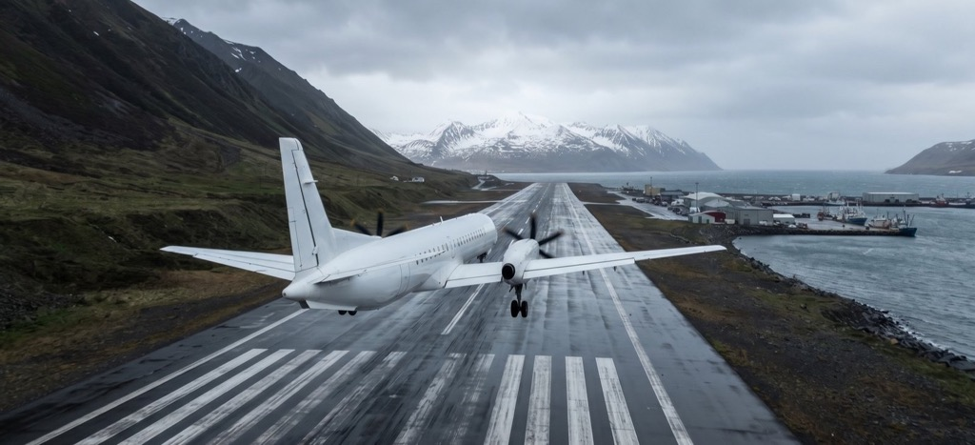
On October 17, 2019, a Saab 2000 on a scheduled passenger flight overran Runway 13 at Unalaska, Alaska, on its second approach, going through the airport perimeter fence and across a road before coming to rest on the shoreline rocks of Dutch Harbor. One passenger was fatally injured, and the NTSB adopted its final report on the accident, AAR-21/05, on November 2, 2021.
The NTSB traced the probable cause to a maintenance error made more than two years before the flight, when the anti-skid wheel speed sensors on the left main gear were cross-wired, most likely during a 2017 overhaul. Because the anti-skid system had no way to flag the error, it went unnoticed until the landing, when a tire skidded and burst and the crew lost braking on three of the four main wheels. With normal braking, the Board found, the airplane should have stopped within the available distance. It also named three contributing factors: a harness design that did not guard against the wiring error, an FAA authorization that did not account for the airport's 300-foot runway safety area, and the crew's decision to land with a reported tailwind above the airplane's 15-knot limit, which the NTSB attributed to plan continuation bias.
That last factor is the one every crew can act on. After going around on the first approach, the crew discussed switching to the opposite runway before coming back around to Runway 13, and shortly before landing the wind was reported at 300° at 24 knots, a direct tailwind. No one on board could have known about the wiring, which is exactly why tailwind limits, airport qualification policies, and runway safety areas matter: they protect against the problem nobody has found yet.
When the winds are shifting, especially on a second attempt, the question worth asking before committing to the landing is a simple one: "If something we can't see goes wrong on this rollout, how much margin do we have left?"
We added this accident to the landing section of our Runway Excursion course as a case study, placed next to the material on tailwind landings, with a new review question built around the decision after a go-around. It shows crews how operator limits and a fresh check of the wind protect against failures they may never see coming.
The source is NTSB Aviation Accident Report AAR-21/05, accident number DCA20MA002. If you want to see how your training lines up with it, we'd love to hear from you.
